Why ignoring small brake noise is risky on the Delhi–Noida expressway
At city speeds, a light squeal may feel like a minor irritation, but at expressway speeds the stakes are much higher. Why ignoring small brake noise is risky on the Delhi–Noida expressway comes down to reduced safety margin: once pads are worn or glazing, brakes need more distance to stop from 80–100 km/h, just when traffic can slow suddenly around exits, barriers or in fog. A driver who continues daily runs despite persistent noise is effectively gambling with longer stopping distances in high‑speed conditions.
Squealing or grinding noise at highway speeds is a danger sign
A squealing or grinding brake noise at highway speeds usually means pad friction material is low, wear indicators are contacting the rotor, or metal‑to‑metal contact has already begun. At high speed, this reduces friction consistency and can cause the car to pull, vibrate or feel unstable under hard braking. If grinding is present, the rotor surface is already being damaged, and braking effectiveness may degrade rapidly with each expressway trip.
How worn brake pads increase stopping distance on expressways
Pads with very little friction material left, or those that are glazed and uneven, generate less bite when you hit the pedal at 90–100 km/h. This means the car takes more metres to slow down or stop, especially in panic braking scenarios common on expressways when traffic compresses suddenly. On a busy Delhi–Noida run, that extra distance can be enough to rear‑end the vehicle ahead, even if ABS is working correctly.
From brake noise to rotor damage to failure: the chain reaction
When a noisy brake is ignored, the pad can wear down to its metal backing, turning a mild squeal into harsh grinding as metal contacts the rotor. This brake noise to rotor damage to brake failure chain reaction includes grooves, overheating, and possible cracking or warping of the disc. In extreme neglect, caliper pistons can over‑extend, seals can be damaged and fluid leaks or loss of braking on one wheel/axle can occur during emergency stops.
Weak brakes and pile‑up risk on the Delhi–Noida expressway
The Delhi–Noida and Noida–Greater Noida expressways have a history of serious multi‑vehicle crashes, especially when traffic is fast and gaps are small. A car with weak, noisy brakes is more likely to strike the vehicle ahead during a sudden slowdown, becoming the first link in a chain of impacts. Once one vehicle cannot stop in time, the chances of a pile‑up accident on the Delhi–Noida expressway with weak brakes increase dramatically because following drivers also have less space and time to react.
Dense fog plus noisy brakes: a deadly NCR combination
In winter, dense fog on NCR expressways routinely causes low‑visibility conditions and multi‑vehicle collisions when drivers only see obstacles at the last second. With dense fog plus noisy worn brakes, the car may not decelerate quickly enough when brake lights suddenly appear through the mist, even if the driver does react in time. This deadly combination makes it critical that brakes are at full strength before fog season, not “due next service.
Signs your brake pads need urgent replacement before an expressway drive
Before taking the Delhi–Noida expressway, treat these as urgent warning signs:
- Persistent squeal whenever you touch the brake pedal, especially if it is getting more frequent or louder.
- Grinding or scraping sounds that suggest metal‑to‑metal contact.
- Vibration in the pedal or steering, or the car pulling to one side under braking.
If these signs your brake pads need urgent replacement before an expressway drive appear, the safest choice is to postpone the highway run and get pads and rotors inspected immediately.
How a small squeak today can become serious failure tomorrow
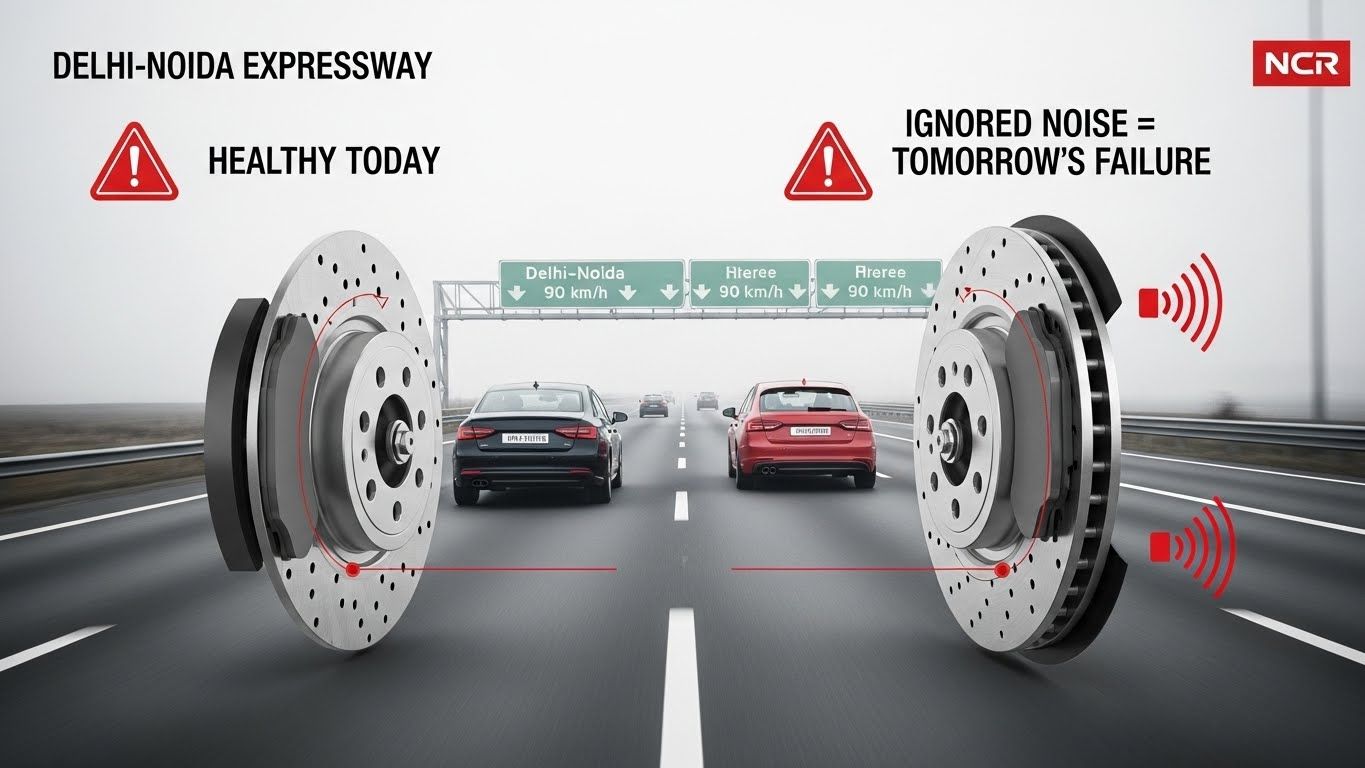
A small brake squeak today is often the pad’s built‑in wear indicator scraping the disc, designed to warn you before the friction material is completely gone. If you keep driving—especially at expressway speeds—the pad continues to thin, heat builds up, the rotor gets damaged and the risk of sudden loss of braking efficiency increases. Left unresolved, this small brake squeak today can become total brake failure tomorrow in the worst‑case scenario, such as an emergency stop in fog or at a sudden jam on the expressway.
Problem
A Delhi–Noida expressway commuter hears a small squeal under light braking but keeps postponing workshop visits because “the car still stops.” Over weeks of high‑speed runs, the pads wear down further, rotor surfaces get grooved and hot, and real braking power drops quietly. One foggy morning, traffic compresses suddenly; the driver hits the pedal hard, but worn pads and damaged rotors stretch the stopping distance just enough to cause a rear‑end impact and trigger a chain collision that could have been avoided with timely brake service.
Solution
The safest habit for regular Delhi–Noida expressway users is to treat any new brake noise as a non‑negotiable inspection trigger, not background noise.
-
Book a brake inspection as soon as squealing, grinding or vibration appears—ideally before your next expressway or fog‑season drive.
-
Replace worn pads early, address rotor damage promptly and never ignore pulling, pedal softness or warning lights. For Noida‑side users who want a quick, professional brake check and pad/rotor service before hitting the expressway, guide them to:
-
Car Service in Noida | 90-Minute Express Service | GaadiMech](https://www.gaadimech.com/car-service-in-noida/greater-noida)
For those starting or ending their drives in or via Greater Noida and using NCR expressways daily, recommend: