Why a small brake noise matters more at expressway speeds
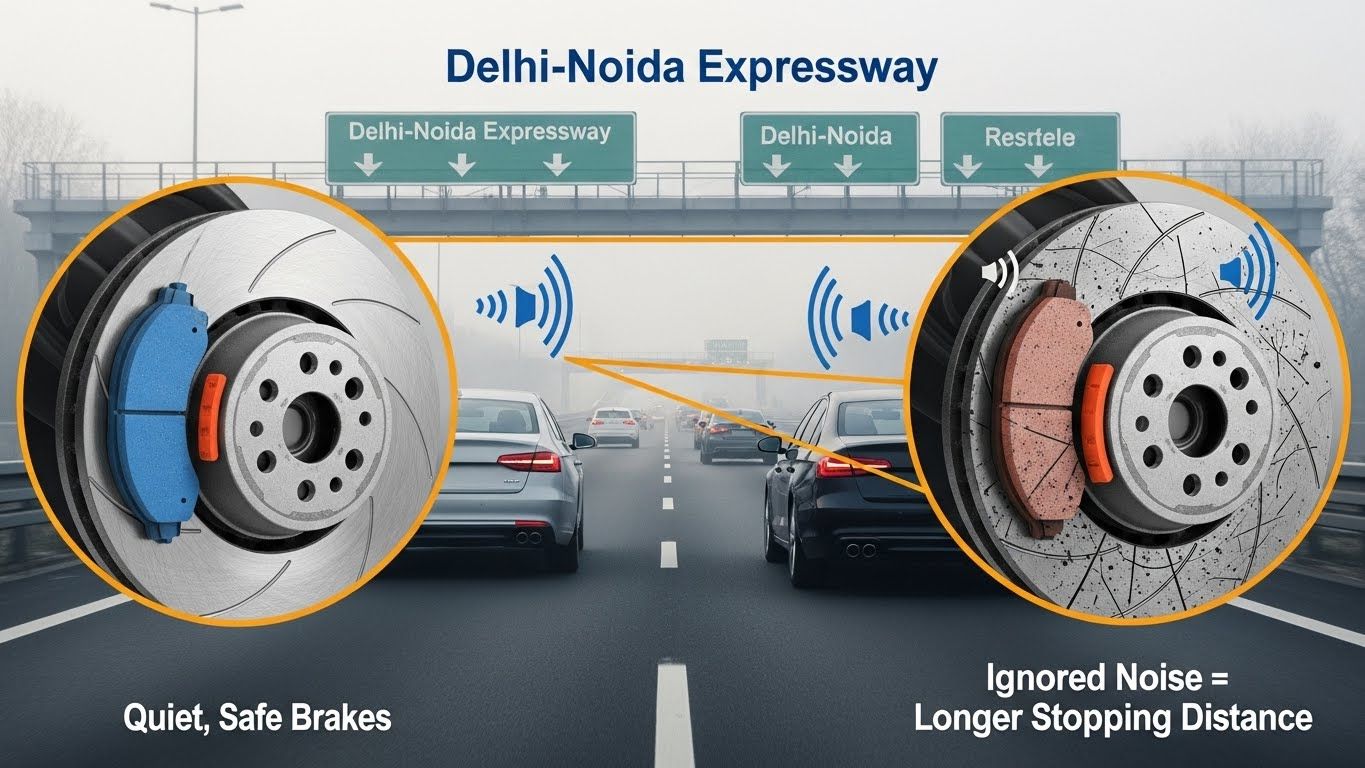
At 80–100 km/h, your car needs far more distance and system health to come to a safe stop than at 30–40 km/h in the city. A small squeal or chirp while braking is often the pad wear indicator scraping the disc, telling you the friction material is nearly used up and braking reserves are shrinking. On an expressway like Delhi–Noida, where traffic can bunch up quickly and sudden slow‑downs happen around exits or fog patches, even a modest increase in stopping distance from worn pads can turn a near miss into a crash.
From squeal to rotor damage to brake failure
When early pad‑wear noise is ignored, the friction material can wear down so far that the metal backing plate starts rubbing directly on the rotor. This metal‑on‑metal contact creates a harsher grinding sound, digs grooves into the disc and overheats the braking surface, weakening friction and causing vibration through the pedal or steering. Left unchecked, this chain reaction can lead to badly scored or cracked rotors, overheated calipers and seals, and in extreme cases partial brake failure under hard emergency braking—exactly the scenario you want to avoid at expressway speeds.
How worn pads increase stopping distance on expressways
Healthy pads and rotors generate strong, consistent friction, converting your car’s high‑speed kinetic energy into heat and safely shedding it. When pads are thin, glazed or uneven, they grip less effectively, so you need more pedal pressure and more road to slow down from 90–100 km/h. On multi‑lane expressways, this extra distance is dangerous: if the vehicle ahead brakes hard, a car with compromised brakes may not shed speed quickly enough, risking rear‑end impact and pushing both vehicles into neighbouring lanes.
Dense fog plus noisy brakes: a dangerous NCR mix
Winter in Delhi–Noida often brings dense fog on the expressways, with visibility dropping to just a few metres and reports of multi‑vehicle collisions. In low visibility, drivers have less time to react and rely heavily on their brakes to quickly scrub speed when lights suddenly appear out of the fog. If your brakes are already noisy and worn, the combination of poor visibility, wet or cold surfaces and reduced brake performance makes pile‑ups more likely. In such conditions, the difference between strong, quiet brakes and noisy, worn ones can be a life‑saving margin.
Signs your pads and rotors need urgent attention before a highway run
Before taking the Delhi–Noida or Noida–Greater Noida expressway, treat these as red alerts rather than minor irritations:
- Persistent squealing or chirping when you lightly press the brake, especially at low speeds.
- Grinding noises that sound metallic, suggesting metal‑on‑metal contact.
- Steering or pedal vibration when braking from higher speeds, or the car pulling to one side.
- Longer pedal travel, a softer, spongy feel or a brake warning light on the dashboard. Any of these signs mean the car needs a brake inspection and likely pad/rotor work before you drive at expressway speeds again.
When a small squeak becomes a highway safety hazard
That first squeak usually appears under gentle braking at city speeds, when there is still some friction material left. If this early warning is ignored, by the time the noise gets louder or turns into grinding, real braking capability has already dropped. On an expressway, there is no “buffer period”: the first time you genuinely need maximum braking could be during an emergency stop in traffic, a sudden obstruction or a fog‑related slowdown. By then, the window to “get it checked soon” is gone, and you are relying on a compromised system in the worst possible moment.
Why timely brake inspection is critical for Delhi–Noida expressway users
Cars that frequently use Delhi–Noida or Noida–Greater Noida expressways face repeated high‑speed braking, lane changes and sudden slow‑downs. This heats up pads and rotors more than city crawling, making wear appear sooner than many owners expect. A time‑based habit helps:
- Get your brakes visually inspected at least every 6 months or before any long highway trip.
- Never ignore new noises, vibrations, pulling or dashboard warnings; treat them as immediate inspection triggers. Timely inspections allow cheap pad replacements and rotor resurfacing instead of full disc, caliper or ABS repairs after extended neglect.
Legal and insurance risks of driving with known brake problems
If you continue using your car on expressways after noticing obvious brake noise or warning lights, it can be considered negligent driving, especially if a collision occurs. In the event of an accident, assessors or investigators who find severely worn brakes, metal‑to‑metal contact or evidence that the noise was ignored may argue that the vehicle was not kept in roadworthy condition. This can complicate insurance claim settlements, reduce payouts or increase your liability, particularly in multi‑vehicle or injury cases where safe braking could reasonably have reduced the impact.
Problem
A Delhi–Noida expressway commuter hears a mild squeal from the front brakes for weeks but keeps postponing a workshop visit because the car “still stops fine” in city traffic. With every expressway run, the pads wear thinner, rotors start developing grooves and braking power quietly drops. One foggy morning, traffic ahead suddenly slows; the driver presses the pedal hard, but worn pads and damaged rotors stretch the stopping distance just enough to cause a rear‑end impact and become part of a chain collision.
Solution
Treat any new brake noise as a safety deadline, not background noise, especially if you regularly use Delhi–Noida or Noida–Greater Noida expressways. The safe, simple plan is:
- Book a brake inspection as soon as squealing, grinding or vibration appears—before your next expressway trip.
- Replace pads early and address rotor issues proactively so your car always has full, predictable braking at 80–100 km/h. For Noida and Greater Noida drivers who want a quick, professional brake check before hitting the expressway, guide them to:
Car Service in Noida | 90-Minute Express Service | GaadiMech