What “Genuine” and OEM-Grade Parts Really Mean
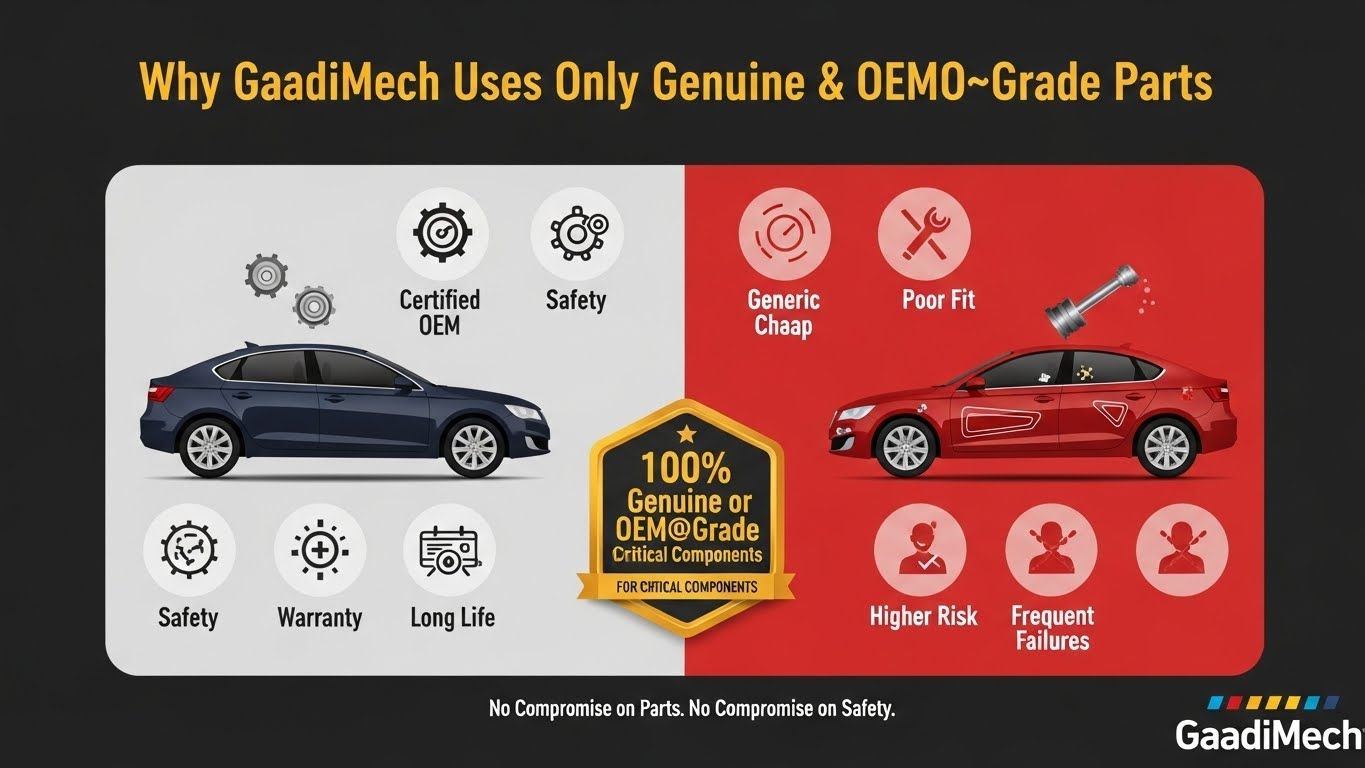
Genuine or OEM (Original Equipment Manufacturer) parts are built to the same specifications and standards as the parts your car came with from the factory. They match the original design for material quality, dimensions, and performance, which means they fit correctly and behave predictably over time. Cheap, low-grade aftermarket parts, by contrast, can vary widely in quality, may not fit perfectly, and may not have passed the same durability or safety testing.
GaadiMech’s policy of using genuine or OEM‑grade parts keeps your car as close as possible to original factory condition, especially for safety‑critical and mechanical components.
Safety, Reliability, and Warranty Protection
For brakes, suspension, steering, engine internals, and other safety‑critical parts, consistent quality isn’t optional—it’s the difference between a safe stop and a dangerous failure. OEM‑grade parts are extensively tested for fatigue, heat, and stress to ensure they continue to perform reliably in real-world Indian conditions.
Sticking to OEM or equivalent quality parts also helps keep your manufacturer warranty and extended warranty on safer ground, since using unapproved, low-grade spares can cause disputes if something fails later. For cars still under warranty or high‑value vehicles, this approach protects both safety and paperwork.
Long-Term Value and Cost Savings vs Cheap Aftermarket
Cheap spares often look attractive at first but can wear out faster, fail prematurely, or cause collateral damage to connected components—leading to more frequent repairs and higher total cost of ownership. OEM‑grade parts usually last as long as the factory originals, meaning fewer repeat jobs, fewer workshop visits, and better long-term reliability.
This is also important for resale value: cars maintained with genuine or OEM‑grade parts hold their value better because buyers and inspectors trust the quality and originality of the components fitted.
Common Problem
A customer chooses a cheap aftermarket brake pad set or suspension part from a low‑quality supplier to “save money.” The part fits poorly, wears out quickly, or behaves unpredictably under hard braking. Within months, the car develops vibrations, longer stopping distances, and uneven tyre wear. In a panic stop situation, this can create a real safety risk for the driver and family—plus extra repair costs to fix the damage caused by inferior parts.
GaadiMech Solution
Explain that GaadiMech avoids this risk by specifying genuine or OEM‑grade parts for brake and suspension work, so components match the car’s original engineering and safety standards. This protects stopping performance, ride comfort, and tyre life, while reducing the chance of repeat failures.
- For periodic servicing where engine oil, filters, and other key parts are replaced only with genuine or OEM‑grade components, book: Periodic Car Service in Jaipur | Scheduled Maintenance
Why Serious Multi-Brand Workshops Prefer OEM/OES Spares
Experienced multi‑brand workshops in India increasingly standardise on OEM or OES (Original Equipment Supplier) parts for critical systems because they reduce comebacks, warranty disputes, and safety incidents. These parts usually come from the same factories that supply carmakers and are built to the same drawings and quality levels, just without the carmaker logo.