Why car batteries fail more often in Delhi–NCR
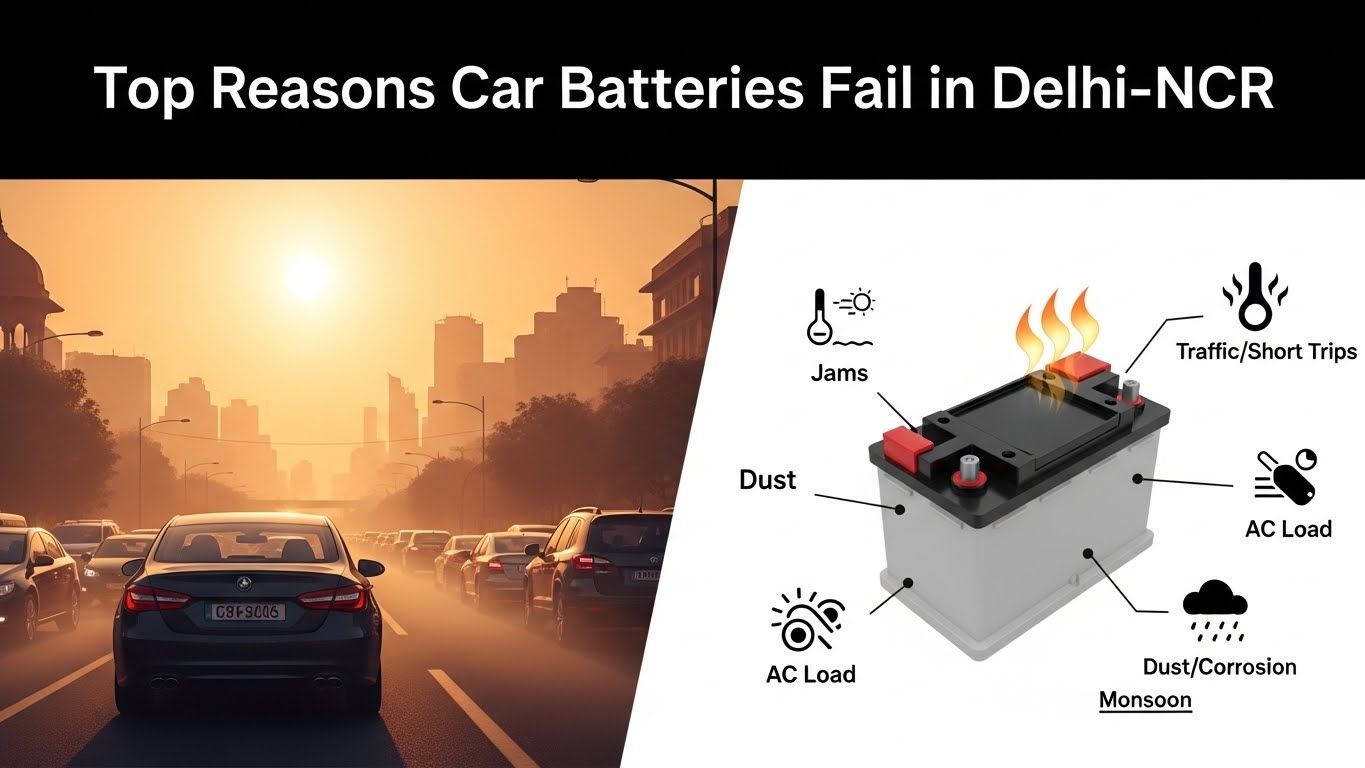
Top reasons car batteries fail in Delhi–NCR are a mix of climate, driving pattern and lack of preventive care. Long, slow commutes with frequent idling and stops mean the alternator often does not get enough sustained time to recharge the battery fully after each start. Add high temperatures and pollution to that, and batteries in Delhi–NCR work harder and age faster than in milder, less congested cities.
Extreme heat and summer temperatures shorten battery life
Delhi–NCR summers regularly see temperatures above 40°C, which is harsh on lead‑acid batteries. Heat accelerates the chemical reactions inside the battery, speeding up plate corrosion and causing electrolyte (battery fluid) to evaporate faster, both of which shorten battery life. In simple terms, extreme heat and summer temperatures shorten car battery life by making it “age” quicker, even if the car is not driven very far.
Short trips, heavy traffic and undercharged batteries
Frequent short trips and crawling traffic are classic Delhi–NCR problems that are bad for batteries. Starting the engine draws a big chunk of power, and the alternator needs sustained running at decent RPM to put that energy back. When drives are short and mostly at idle or low speed, the battery remains chronically undercharged, gradually becoming weak and more likely to fail, especially on a hot day or after the car has been parked for a while.
Constant AC use, idling in jams and electrical load
In Delhi–NCR, most drivers run the AC almost all year, and especially hard in peak summer. At long signals and in bumper‑to‑bumper jams, the engine often idles while the blower, AC compressor, lights, infotainment and chargers are drawing power. This constant AC use and idling in jams increases the electrical load; if alternator output at idle is not enough or the battery is already weak, it can slowly discharge instead of charge, accelerating wear and leading to no‑start situations.
Pollution, dust and corrosion on battery terminals
Delhi–NCR’s high dust and pollution levels mean grime easily collects under the bonnet, including on the battery. Over time, moisture and acidic vapours can react with dust and battery fumes to create corrosion on battery terminals and clamps, seen as white or greenish deposits. This pollution, dust and corrosion on battery terminals increases resistance, reduces charging efficiency and can make a relatively healthy battery behave like a weak one, especially during cranking.
Why regular service and battery health checks prevent breakdowns
Many owners only think of the battery when the car refuses to start, but regular service visits are the perfect time to catch issues early. Regular car service and battery health checks allow technicians to measure voltage, check cranking performance and inspect for corrosion or loose clamps, spotting a marginal battery before it leaves you stranded. This proactive approach is especially important in Delhi–NCR, where traffic and heat make roadside failures more stressful and time‑consuming.
What should be done during service: cleaning, levels and load test
A good battery check during service is more than just “looks okay.” It should include:
- Battery terminal cleaning to remove corrosion and ensure solid contact.
- Electrolyte level check (where applicable) to make sure plates are covered and no cell is low.
- A load test or battery health test to see how it performs under starting‑like demand.
These steps—battery terminal cleaning, electrolyte level check and load test—help detect weak batteries and charging problems, reducing the odds of sudden failure under Delhi–NCR conditions.
Ideal battery replacement interval for Indian city cars
In Indian city conditions with heat and traffic, many experts and battery brands suggest that 3 to 5 years is a realistic life for a typical car battery, depending on usage and maintenance. In Delhi–NCR, where batteries face both extreme heat and severe traffic patterns, leaning towards the lower end of this range and testing more frequently after year three is a smart strategy to avoid unexpected failures.
Monsoon humidity, waterlogging and increased failures
Monsoon in NCR brings its own battery challenges: high humidity, waterlogging and frequent short, electrical‑heavy trips. Moisture can encourage corrosion on terminals and connectors, while driving through waterlogged roads can cause alternator and electrical issues that indirectly affect battery health. Combined with already stressed, heat‑aged batteries, monsoon humidity and waterlogging in NCR often push borderline batteries over the edge, leading to a spike in failures.
Simple battery care tips for Delhi–NCR drivers
Delhi–NCR drivers can greatly reduce battery troubles with a few simple habits:
- Have the battery tested before and after peak summer, and after three years of age.
- Keep terminals clean and clamps tight; get any white/green deposits cleaned professionally.
- Avoid long idling with heavy electrical loads when possible, and occasionally take a longer drive to allow full charging.
- Park in shade or covered areas to reduce heat exposure when you can.
These simple battery care tips for Delhi–NCR drivers help avoid classic no‑start situations at office basements, malls or early morning airport runs.
Problem
A Delhi–NCR commuter drives mostly short, jam‑filled routes with AC always on, in 40°C summers and dusty conditions. The battery is never fully charged, terminals slowly corrode and the unit crosses three years with no testing. One morning, the car will not start in the basement parking, or worse, stalls after a brief stop in traffic, causing stress, delays and emergency replacement at higher cost.
Solution
The smart way to handle Delhi–NCR’s battery‑killing conditions is to combine regular service with focused battery health checks:
- Ask for terminal cleaning, electrolyte/health check and a proper load test at each major service, especially before/after summer and monsoon.
- Plan a proactive replacement around the 3–5 year mark instead of waiting for a complete failure.
For Noida‑side drivers who want their battery condition checked and replaced, if needed, during a quick, professional service slot, direct them to:
Car Service in Noida | 90-Minute Express Service | GaadiMech
For Greater Noida and nearby NCR commuters facing the same traffic and weather, recommend: