Why Short Office Runs in Noida Are Hard on Your Engine
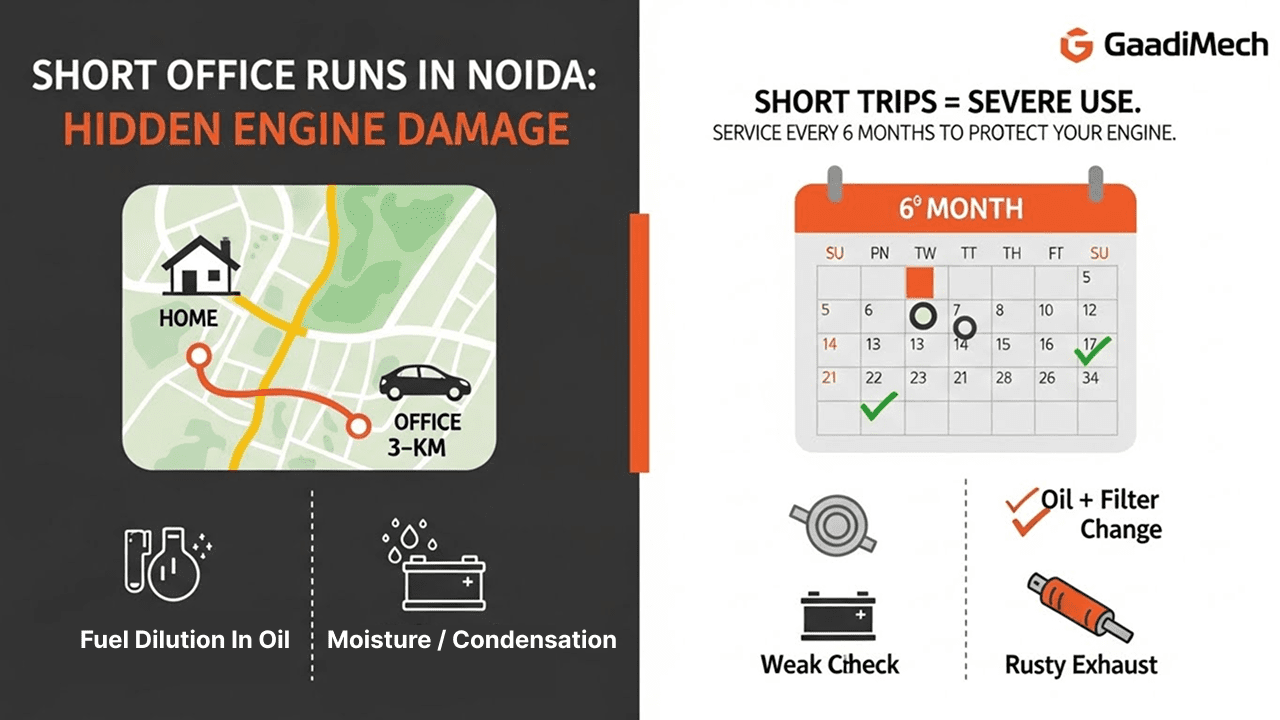
Short office runs in Noida—typically 3–5 km each way, often in traffic—don’t give the engine enough time at proper operating temperature. The oil, coolant, and metal parts stay in the “warming up” zone longer, where wear and contamination are higher. On every cold start, extra fuel is injected, and until the car is fully warm, more fuel and moisture can slip past the piston rings into the oil, slowly compromising lubrication. Over months of short trips, this pattern adds up to more internal stress than a single long drive, even if the total yearly kilometres are low.
Moisture, Fuel Dilution and Sludge on Short Trips
When the engine never stays hot for long, water vapour and unburned fuel don’t fully evaporate from the oil. Instead, they mix into it, leading to:
- Fuel dilution: Thins the oil film, reducing its ability to protect bearings and other moving parts.
- Moisture buildup: Promotes internal corrosion and that milky “mayonnaise” residue sometimes seen under oil caps.
- Sludge formation: Contaminants and oxidised oil can start forming sludge in low‑flow or cooler areas of the engine. In a Noida routine of 10–20 minutes each way, five days a week, the engine spends most of its life in this “worst zone” unless it occasionally gets a proper, longer warm run plus timely oil changes.
Battery Drain and Exhaust Rust from Short Distance Driving
Short trips also punish components beyond the engine:
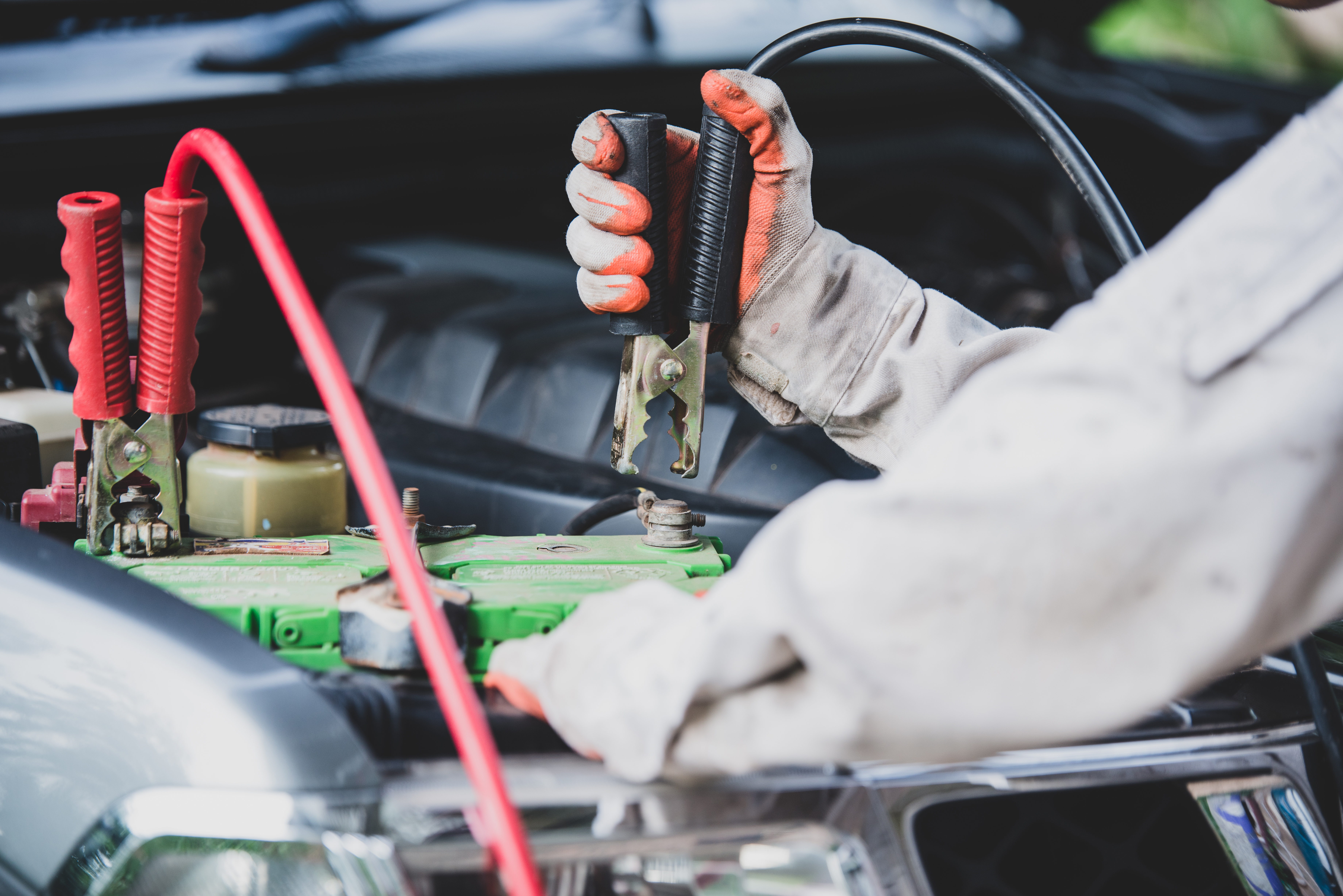
- Battery: Starting the car takes a strong surge of current. On very short drives, the alternator may not get enough time at proper RPM to fully recharge the battery, especially if you use AC, lights, and infotainment all the way. Over time, the battery stays in a partial charge state and fails earlier than expected.
- Exhaust: Because the exhaust system doesn’t stay hot, moisture from combustion and the environment condenses inside the pipes and muffler. With repeated short runs, this can lead to internal rust, pinholes, and noisy exhaust leaks.
So even though you “hardly drive,” a short‑trip Noida car can eat batteries and exhausts faster than a highway car that does proper long runs.
Why 3–5 km Office Cars Need More Frequent Service
Cars that only do short office runs in Noida face two big misconceptions:
- I drive fewer kilometres, so I can service less often.
- Synthetic oil means I can safely stretch my service to the maximum interval.
In reality, short‑trip use is exactly the kind of severe use for which manufacturers and experts recommend shorter oil and service intervals. Oil ages by time, temperature cycles, and contamination, not just by odometer readings. Filters clog earlier, batteries get weaker, and exhaust corrosion is higher on these patterns than on long trips.
A practical thumb rule for such usage in Indian city conditions is:
- Service at least every 6 months or 5,000–7,500 km, whichever comes first, even if the manual says longer. This is not “extra cautious”; it’s simply matching your service to how the car is being used.
Real Problem for Noida Short-Trip Owners
A typical Noida professional drives 3–5 km to the office and back, mostly in slow traffic. The car clocks only ~6,000–7,000 km a year, so they delay servicing to once a year or beyond, assuming low mileage equals low wear. Over time, fuel‑diluted, moisture‑laden oil circulates for months; sludge risk rises, the engine feels rough and noisy, cold starts get harder, the battery weakens, and the exhaust quietly rusts from the inside. None of this shows up as a big “breakdown” at first—it’s hidden damage.
Simple Service Fixes Your Car
The easiest and most effective protection is to switch from a kilometre‑only mindset to a strict time‑based service habit:
- Every 6 months for short‑trip Noida cars:
- Engine oil + oil filter change
- Basic health check for battery, exhaust, coolant, and visible leaks
This keeps oil fresh, flushes contaminants before they become sludge, and catches early battery or exhaust issues before they result in non‑start or loud failures.
You can guide readers to take this step with a clear call‑to‑action like:
-
For Noida short-trip users who want a quick but complete service that protects engines from hidden short‑run damage, book: Car Service in Noida | 90-Minute Express Service | GaadiMech
-
For Greater Noida professionals with similar usage, suggest: Car Service in Greater Noida, Noida | GaadiMech
Ideal Service Interval for Short-Trip City Cars in India
For cars used mainly for short city trips (like many Noida office commutes), a balanced plan looks like this: Every 6 months
- Engine oil and filter
- Battery voltage/health check
- Visual inspection of belts, hoses, coolant, and exhaust
Every 12 months
- Air filter and cabin filter change (especially important in dusty, high‑pollution areas)
- More detailed check of brakes, suspension, and steering components
This schedule recognizes that the car’s “hard life” is hidden in warm‑up cycles, short runs, and pollution—not just in kilometers driven.
Watch for these signs your short commute is starting to hurt the engine:
- Engine feels increasingly rough or noisy, especially at cold start
- Fuel economy drops on the same route without changes in traffic or driving style
- Persistent condensation, white sludge under oil cap, or frequent battery issues
- Strong fuel smell in oil or cabin after drives Any of these signals are a cue to service earlier rather than later.