How Delhi–NCR roads accelerate suspension wear
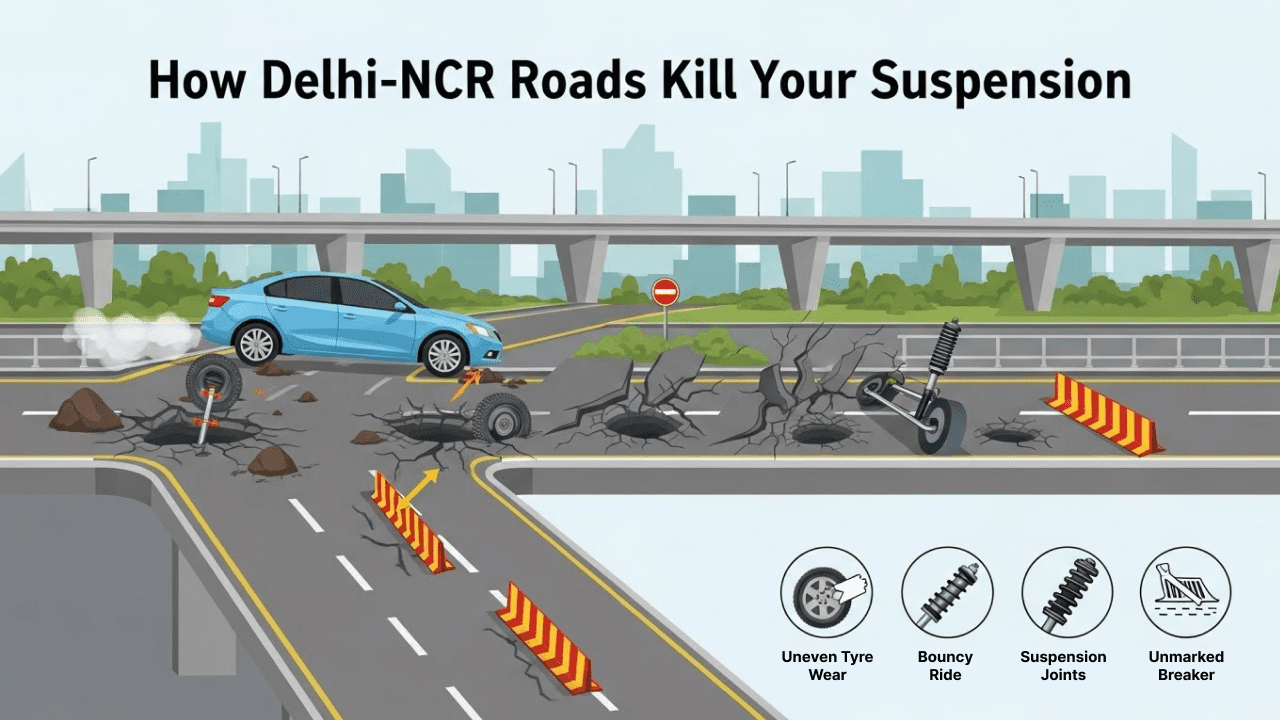
Daily driving in Delhi–NCR rarely means smooth highways alone; it is a mix of patched tarmac, broken inner roads, concrete joints and sudden rough stretches. Each time your car hits a pothole, broken patch or sharp bump, the shocks and struts have to absorb a spike of force far above normal city use. Over thousands of such hits, seals in shocks can start leaking, internal valves wear out, and rubber bushes in control arms and links crack or loosen, shortening the life of the entire suspension package.
Potholes, unmarked breakers and hidden monsoon damage
Potholes and unmarked speed breakers are the worst enemies of shocks and struts in Delhi–NCR, especially at night or in rain when they are hard to see. A single deep pothole can bend rims, damage struts and knock alignment out in an instant, while repeated hits over months slowly destroy internal components. Unmarked or over‑tall speed breakers force the suspension to compress suddenly; if taken too fast, they can bottom out the suspension, stressing top mounts and springs, and causing early rattles and clunks.
Flyovers, joints and premature bush wear
Delhi–NCR flyovers and elevated corridors often have broken tarmac, patch repairs and sharp expansion joints at the start and end. These act like small but frequent impacts that keep punching the suspension, especially at typical flyover speeds. With time, rubber and polyurethane bushes in lower arms, stabiliser links and other joints start to crack, harden or develop play, leading to looseness in the entire setup. This premature bush wear shows up as knocks, squeaks and vague steering feel far earlier than it would on smoother roads.
Uneven tyre wear and poor alignment
When suspension components and bushes wear out, the wheels no longer maintain the ideal alignment angles the manufacturer designed. This misalignment causes uneven tyre wear, such as one edge wearing faster than the other or patchy wear patterns across the tread. Drivers in Delhi–NCR often notice the steering pulling to one side, the wheel sitting slightly off‑centre or vibrations at certain speeds, all of which point to alignment issues linked to rough roads. Ignoring these signs wastes tyres, increases rolling resistance and further stresses the suspension and steering.
How rough roads affect braking and steering control
A healthy suspension keeps tyres firmly planted on the road surface so that brakes and steering can do their job properly. On bad Delhi–NCR roads, worn shocks let the car bounce and hop over bumps, which briefly reduces the tyre’s contact with the road and hurts braking efficiency. In emergency braking or sudden lane changes, a tired suspension can make the car nose‑dive, lean excessively and feel unstable, increasing stopping distance and making steering corrections harder to control. This is especially risky at flyover speeds, on wet monsoon surfaces and in sudden jams.
Clear signs your suspension is suffering
Delhi–NCR drivers often get used to gradual changes and only react when comfort is badly gone, but your car usually gives clear signals earlier:
- Bouncy, floaty ride where the car keeps bobbing after a speed breaker or pothole.
- Clunks, knocks or squeaks from the front or rear when going over bad patches or turning into ramps.
- Pronounced nose‑dive under braking, excessive body roll on flyovers and vague, delayed steering response. If you notice these along with uneven tyre wear or pulling to one side, it is a strong hint that rough roads have already worn shocks, struts or bushes.
When to inspect suspension on Indian bad roads
On paper, many suspensions can last well over 60,000–80,000 km, but Indian bad roads, especially in Delhi–NCR, cut that life significantly. For cars that regularly tackle potholes, rough inner streets and damaged monsoon patches, a practical thumb rule is to get a thorough suspension inspection every 20,000–30,000 km. This check should include shocks/struts, springs, bushes, ball joints, tie‑rods, stabiliser links and mounts, along with alignment and tyre wear patterns. Catching play, leaks or cracks early often makes the difference between simple part replacements and a full suspension overhaul later.
Driving tips to protect suspension in Delhi–NCR
Even in tough conditions, driving style can significantly slow down suspension wear in Delhi–NCR. The most important habits include slowing well before speed breakers, taking them diagonally only when necessary and avoiding harsh hits to the underbody. Reducing speed on visibly broken stretches and never diving into water‑filled patches at full speed protects both suspension and tyres. Avoiding overloading the car with too many passengers or heavy luggage reduces the force with which the suspension bottoms out, extending the life of shocks, springs and bushes.
When to consider heavy‑duty or gas shocks
For some Delhi–NCR users—like those who frequently drive to construction sites, villages around NCR or carry full loads—stock suspension may feel overwhelmed. In such cases, heavy‑duty or gas‑charged shocks can provide better heat resistance, more consistent damping and improved control over rough surfaces. Upgraded setups can reduce bouncing and body roll, but they should be chosen carefully to match the car, tyre size and usage, because overly stiff suspension can hurt comfort and stress other components. The decision to upgrade should ideally come after the stock setup has been checked, restored and aligned, not as a band‑aid over neglected maintenance.
Problem
A typical Delhi–NCR commuter drives daily over patched roads, sharp flyover joints and surprise potholes, yet only visits the workshop when the car feels “too bouncy” or tyres look badly worn. By that time, shocks may be weak, bushes cracked, alignment far off and tyres unevenly worn, making the car unstable under braking and on flyover curves. Ignoring early clunks, mild bouncing and edge wear quietly turns normal city use into a big suspension repair bill and compromised safety.
Solution
The smart way to handle Delhi–NCR’s road reality is to treat suspension as a consumable that needs regular checks, not a “fit and forget” system. Owners should:
- Get a suspension and alignment check every 20,000–30,000 km or earlier if bounciness, clunks or uneven tyre wear appear.
- Drive slower over speed breakers and rough patches, avoid overloading and fix alignment as soon as pulling or off‑centre steering is noticed. For Delhi–NCR drivers who want a thorough suspension and alignment inspection without losing a full day, recommend booking through:
Car Service in Noida | 90-Minute Express Service | GaadiMech
For those commuting from or via Greater Noida and facing equally bad stretches on their daily routes, guide them to: