City vs Highway: Different Types of Stress
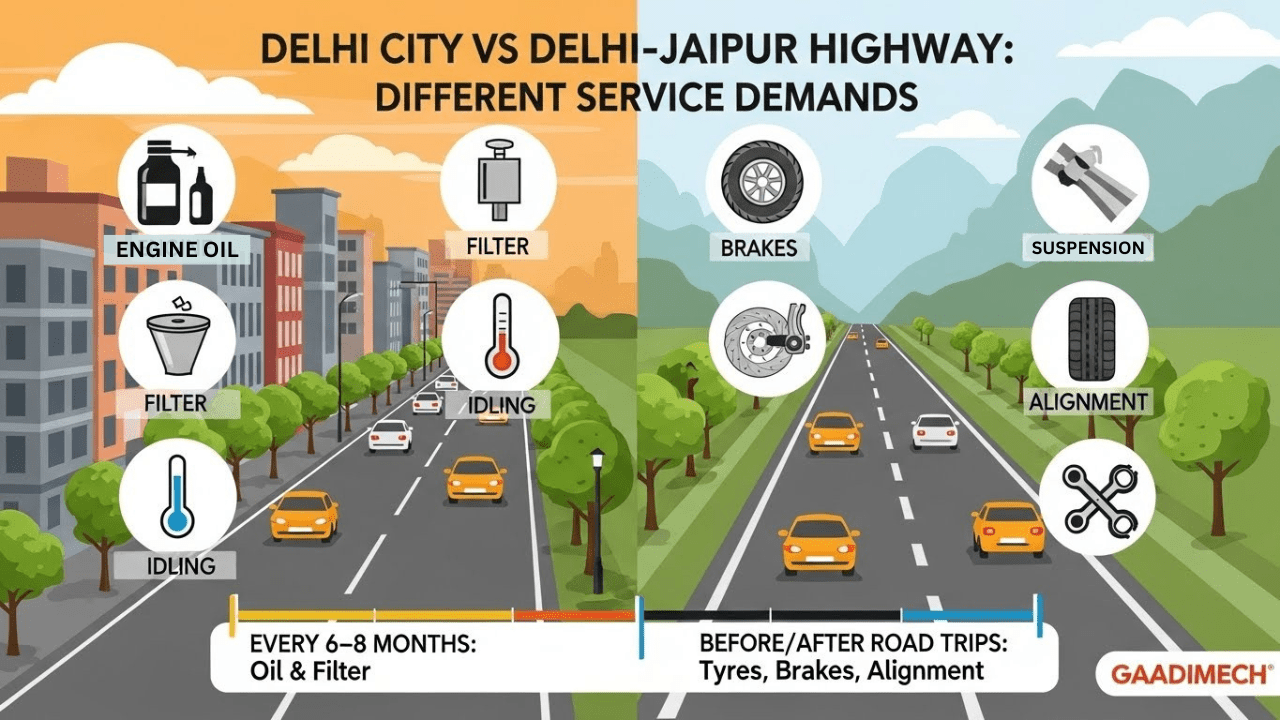
Delhi NCR’s stop‑go traffic, idling, short trips, and heat are classic “severe use” for engine oil, filters, clutch, and cooling system. The engine runs hot but doesn’t cover many kilometres, and never gets long, clean stretches at steady speed. Highway runs between Delhi and Jaipur, by contrast, are steadier on the engine but harder on tyres, brakes, and suspension because of higher speeds, emergency braking, and road undulations.
For a service mix that matches both patterns, you can guide readers to: Car Service in Greater Noida, Noida | GaadiMech (https://share.google/ocvvpqtOeFIZWVbo8)
How Delhi Traffic Changes Oil and Filter Intervals
Short city commutes, long idling at signals, and slow crawling in NCR mean the oil ages more by time and heat cycles than by distance. Even when owners drive fewer kilometres overall, oil and filters in these conditions generally need changing closer to every 6 months rather than stretching to a long “normal” interval. Treating Delhi use as severe service (instead of normal) is the safest way to prevent sludge, fuel dilution, and early engine wear.
A simple rule your blog can share: If a car does regular Delhi office commutes plus some Jaipur trips, plan oil + filter at least every 6–8 months, not just at high kilometre milestones.
What Highway Driving to Jaipur Wears Out
On the Delhi–Jaipur stretch, the engine is usually happier—steady RPM and good cooling airflow—but the rest of the car is tested harder:
- Tyres: High speed + heat + long runs = faster tread wear and higher risk from under‑inflation.
- Brakes: Repeated braking from highway speeds, especially near tolls and junctions, accelerates pad and disc wear.
- Suspension & alignment: Expansion joints, patched surfaces, and occasional potholes slowly knock alignment out and wear bushings and shocks. So even if oil life is fine after a few runs, the car still needs tyre, brake, and alignment checks more often than a purely city-only car.
Best Service Schedule for Mixed Delhi City + Jaipur Highway Use
A practical, easy-to-remember schedule you can present:
-
Every 6–8 months (or ~7,000–10,000 km):
-
Engine oil + oil filter
-
Basic multipoint health check (coolant, belts, visible leaks)
-
Before / after 1–2 Delhi–Jaipur runs (or at least once a year):
-
Tyre pressure, tread, and rotation
-
Brake pad/disc inspection
-
Suspension and wheel alignment check
-
Windscreen, wipers, and lights check for safe highway speeds
This balances Delhi’s severe oil demands with Jaipur highway stress on tyres and suspension.
Problem + Solution (with Backlink You Can Drop into the Blog)
Specific Problem to Explain in the Blog
A typical NCR owner uses the car for short Delhi office commutes all month, then does a few Delhi–Jaipur highway trips every quarter. They assume “highway miles are easy,” follow only the long interval from the manual, and rarely get alignment or brake checks unless something feels very wrong. Over time, the oil is older than it should be for Delhi conditions, and tyres and brakes are worn unevenly from repeated high‑speed trips—creating a hidden safety and reliability risk.
Simple Service Fix You Can Recommend Advise readers to:
- Switch to a 6–8 month oil and filter cycle (even if they haven’t reached the maximum kilometres), to protect the engine from Delhi’s stop‑start abuse.
- Add a tyre, brake, and alignment check anytime they plan or complete a Delhi–Jaipur run, so highway wear is caught early and the car stays safe at speed. You can then plug in a clear CTA like:
-
For engine oil + filter and periodic city‑plus‑highway maintenance, book: Car Service in Noida | 90-Minute Express Service | GaadiMech
-
For tyre, brake, and suspension checks tailored to Noida–Jaipur usage, suggest: Car Service in Greater Noida, Noida | GaadiMech
This gives you a concrete problem + solution + Gaadimech backlink block that fits naturally near the middle or end of the blog.